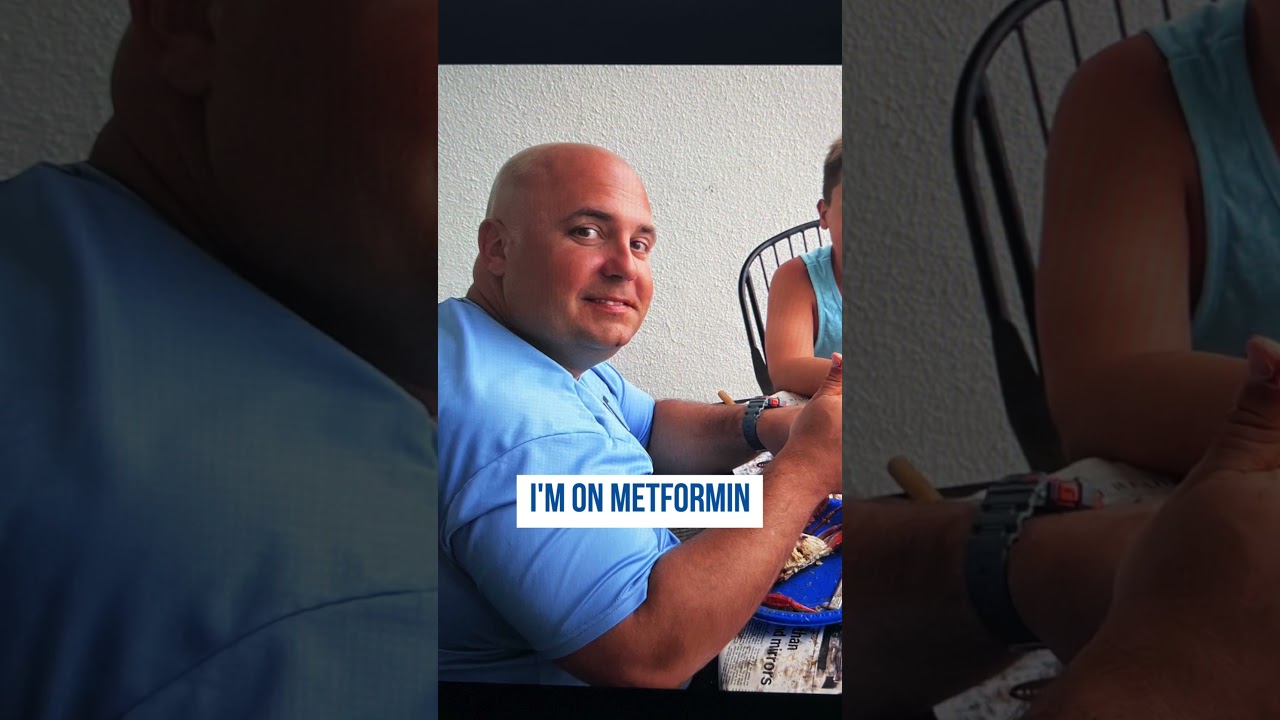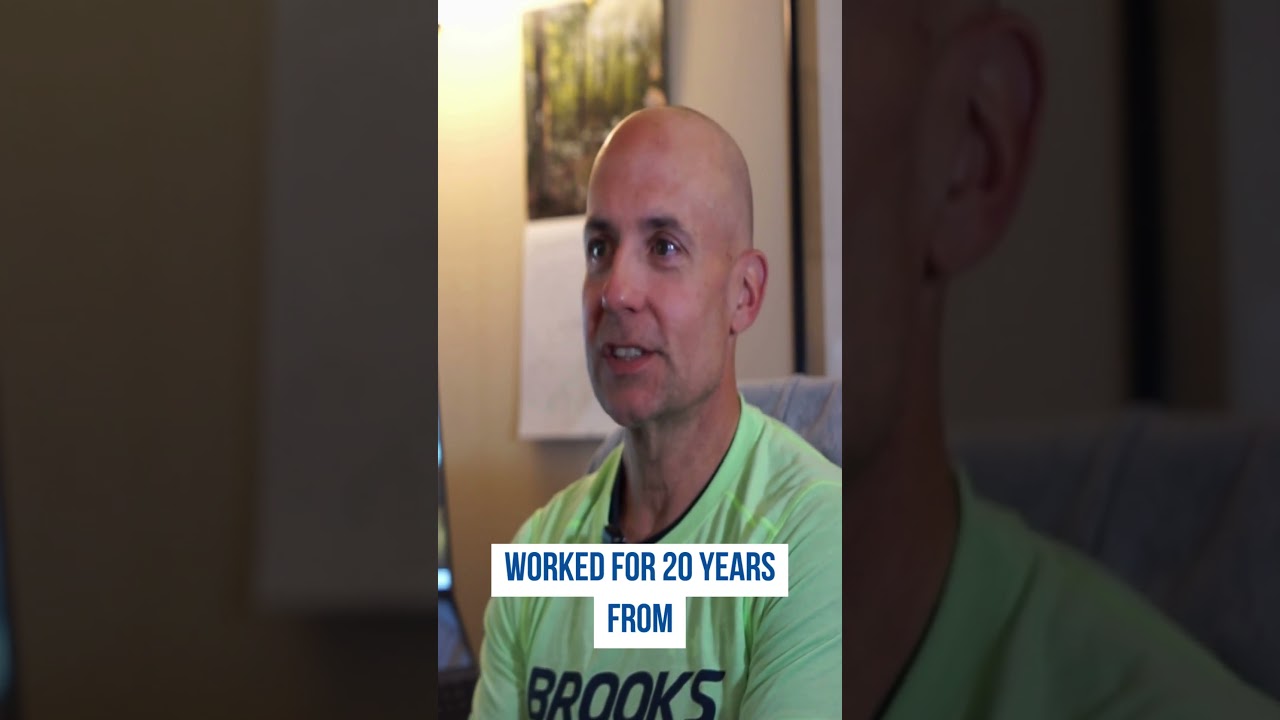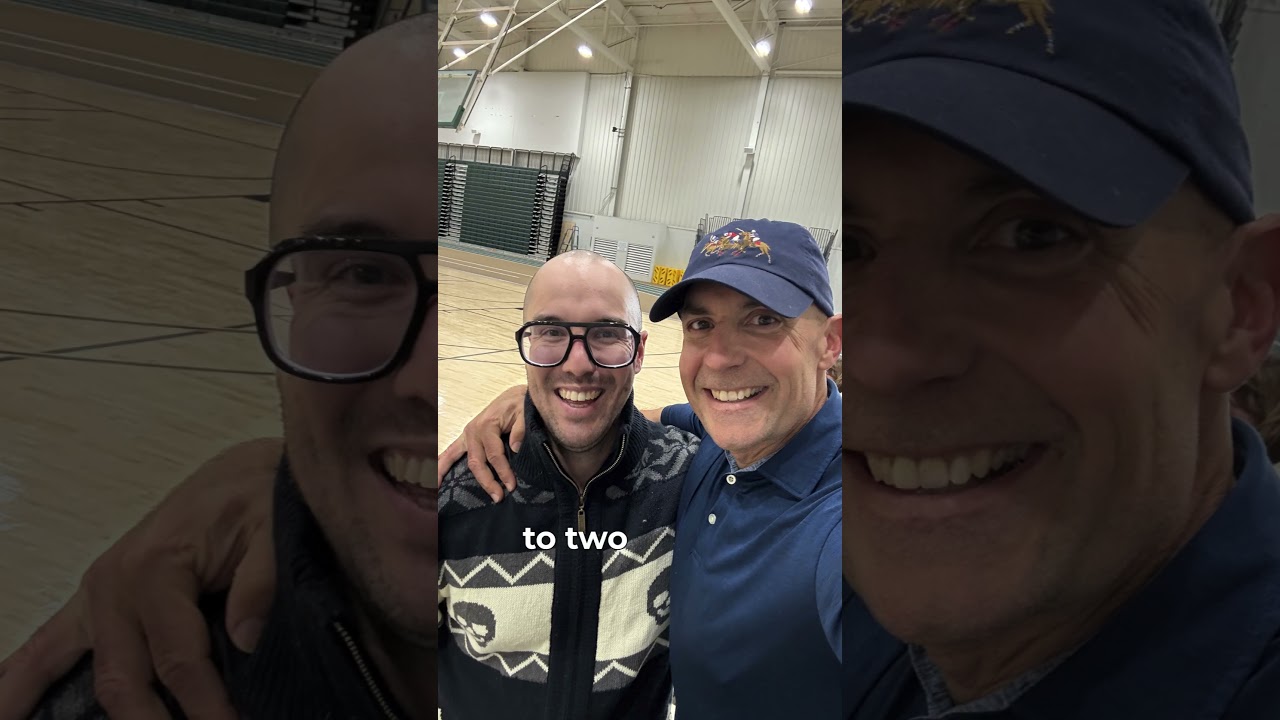
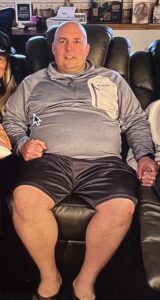
Sometimes, a single photograph can hold a mirror up to our past, forcing us to confront exactly how far we have drifted from the person we used to be. For Mike Martin, an academic advisor at Hagerstown Community College, there is one specific picture kept on his phone. It serves as a permanent anchor, reminding him of the vulnerability of where his journey began.
“I look back, I found it after all this started,” Mike shares softly. “I see it, and I’m just like, ‘Whoa. I really let myself go.’ To see that and see where I am now, it’s like, man, how in the heck did I even move? How did I carry myself around? I looked and felt unhealthy. I didn’t like my picture taken, I was embarrassed, but there was no solution. In my mind, I was stuck.”
Before finding a path that stuck, Mike spent over two decades trapped on a punishing physical and metabolic rollercoaster. He had not always struggled this way. Throughout his youth, Mike was a true gym rat, raised by physical education teachers and coaches. He was an elite collegiate baseball player at UMBC, moving with the grace of an athlete whose body fat sat safely under ten percent.
But life has a way of shifting our baselines. During the fall of his senior year, a devastating knee injury required a major surgical reconstruction, which was the second of what would eventually become six knee operations. Suddenly, a young man defined by constant movement was confined to crutches, entirely non-weightbearing for six weeks. While his physical output dropped to zero, his athlete-level appetite remained unchanged. In a matter of months, his playing weight excelled from the 170s to nearly 190 pounds.
When his college career ended, the cycle compounded. Mike entered the workforce, taking a desk job where he sat all day. He would return home physically and mentally exhausted, his body tired from years of competitive strain. The scale crept from 220, to 250, and eventually higher. Every attempt to claw his way back using traditional, restrictive mindsets only pushed success further out of reach.
“It had been a constant battle before where I would lose 10 pounds by trying to work out and starve myself,” Mike recalls. “And it was like the worst thing in the world, because I was hungry and I wasn’t doing it the right way. Weight would come down like four or five pounds, and right away it would shoot right back up. I say to this day, I had an unhealthy relationship with food. I was addicted to food. I still am, and that’s constantly a battle I fight every day.”
Around 2014 and 2015, Mike endured the painful loss of both of his parents to cancer in the very same year. Compounding this grief, his son’s mother passed away when Jack was just six years old. Facing the world alone as a single father to a young child while navigating profound family grief, Mike turned to food to cope with the immense stress.
By 2015, Mike was prescribed an escalating list of medications for high blood pressure, high cholesterol, and pre-diabetic complications. Then came a routine GI screening and a diagnosis of fatty liver syndrome. His physician looked him in the eye and issued a clinical warning that would echo in Mike’s mind for years: If you let this go for six or seven years, you are going to have severe, irreversible problems.
Like many of us, Mike tried to brush the truth aside, but the body keeps score.
Fast forward several years to the winter of 2020. Mike was lying in bed when a sudden, sharp, stabbing pain cut through his right side, right around his liver area. As he rolled over, the words of the GI doctor from years ago echoed in his mind.
Lying there in the silence of his home, fear gave way to profound clarity. Jack had already lost his mother, and Mike’s parents were gone. It was just the two of them.
“I remember kind of getting pretty emotional,” Mike recalls, remembering the terror of that night. “Because I was like, ‘God, I can’t leave Jack. I can’t leave him by himself. I got to be here for him, I’m all he has.’ I felt those pains, and I was like, I got to do something.”
At one of his screenings for liver health, a compassionate Nurse Practitioner, referred him to CoreLife, reassuring him that his insurance would help cover the care. In June 2021, Mike walked through the clinic doors for his initial evaluation–standing on the scale at a baseline of 283 pounds, he officially began his transformation.
When Mike took his first steps into the clinic, his physical body had significant barriers to overcome. Chronic inflammation from his six knee surgeries made basic mechanics cumbersome. He could not drop into a basic bodyweight squat without sharp joint pain. His confidence, once anchored in his athletic identity, had bottomed out.
“In that first month, I realized that when I had lost the 10 pounds and people were noticing, for me, losing the first 10 to 20 pounds were the hardest,” Mike explains. “Because at the time I didn’t feel any different, I didn’t look any different. I knew this was not going to happen overnight. In my mind I kept saying, ‘Give it a month. Give it a year. Like, where am I going to be next year this time?'”
Instead of expecting immediate results, Mike surrendered to the process. He committed to a solid month of asking endless questions, choosing to believe that consistency would yield new habits. When he stepped onto the scale at the end of that first month and saw a 15-pound drop, the psychological momentum completely shifted. He was down into the 270s, and his self-esteem began to reawaken.
What changed the trajectory for Mike was an environment designed to protect his vulnerability. CoreLife’s model brought a synchronized team of a nurse practitioner, a registered dietitian, a behavioral therapist, and a fitness specialist under one roof.
For someone carrying nearly 300 pounds and protecting severe joint injuries, walking into a standard commercial gym can be a source of profound isolation.
“When I was overweight, it just didn’t feel right going to a gym. It didn’t feel right,” Mike reflects honestly. “But at CoreLife, it was this feeling that it was okay to do everything I needed to do, all wrapped up into one place. I didn’t feel like I was different, or in the minority. It became my home away from home.”
At the center of this safe space was Mike’s relationship with his registered dietitian, James Matherly, the man Mike calls his first rock. James stripped the shame and guesswork out of food by treating nutrition as a logical, empowering math equation.
Metabolic testing revealed Mike’s basal metabolic rate (BMR) sat at 2,100 calories, with an active daily burn of 2,600. To create a healthy, sustainable weight loss of two to three pounds a week, James gave him a clear daily budget of 2,100 calories.
“The whole thing of managing and charting calories was all about a game for me,” Mike laughs. “It was a budget. I basically had a budget, and I like to eat! So it was all about how much food could I jam in my stomach while keeping my calories down.”
Grocery shopping became an exercise in high-volume, low-calorie strategy. But Mike emphasizes that the budget only works if your data is flawless.
“Anyone that goes on this journey has to realize that if you’re going to use an app and you’re going to chart food, you’re only lying to yourself when you don’t put it in,” Mike says flatly. “If you put in two tablespoons, put two tablespoons in. Don’t put one, because you’re only cheating yourself. If you use ketchup or mustard, put it in there. You need to know everything that you’re putting into your body.”
He flooded his routine with high-volume choices and committed to a massive clinical standard of water intake, which was 100 ounces a day. “I didn’t have time to drink soda, I didn’t have time to drink tea, because that didn’t count,” he recalls. “It was all I could do to put water in my stomach.”
By the winter of 2023, Mike’s relentless consistency had driven his weight down through the 250s and 240s, arriving at a halt at 220 pounds. He had shed over 60 pounds, but his body had hit a biological plateau.
Rather than panicking, Mike and James ran another BMR test. The math was simple: a smaller body requires less energy to move. To account for his new weight, his target budget was adjusted down to 1,800 calories.
To maximize his active burn, Mike partnered with the clinic’s fitness specialist, Garrett Perrella, his second rock. Together, they began targeted strength conditioning to support his knees. By the spring of 2023, Mike was closing in on the low 200s and dared to voice an audacious dream: he wanted to run a summer Spartan race with his son, Jack, who was coming home from college.
There was only one problem: Mike was utterly convinced his knees would never allow him to run again.
“I haven’t run in a way, I don’t even know how to run at this point with my knees,” Mike admitted to Garrett.
Garrett looked at him and refused to let old limitations dictate his future. “You know what, we’re gonna run,” Garrett said calmly. “I’m gonna teach you how to run. Let’s just do some stuff that’s around the gym.”
Step by step, lap by lap around the facility’s circle, Garrett coached Mike on the biomechanics of running, rebuilding the structural muscles around his joints. The pain that had defined Mike’s life for twenty years began to dissolve. In July 2023, Mike did not just complete the Spartan Race; he conquered it side-by-side with Jack, moving with a power he thought he had left behind in college.
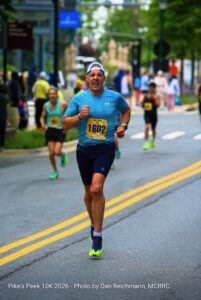
The momentum was unstoppable. Through the fall of 2023, Mike ran a local 5K, a 10K across the Bay Bridge, and a triumphant Turkey Trot at Hagerstown Community College. It was around this time that he stepped onto the clinic scale and realized he had officially lost 100 total pounds. He rang the clinic celebration bell as the entire staff cheered, sharing in the victory.
This milestone brought a bittersweet procedural shift: because his BMI had dropped out of the overweight category, his insurance would no longer cover his clinical consultations. But the foundation was already poured deep into his soul. James looked at him and said, You know what you’re doing at this point. Mike had the tools, and he chose to keep using the clinic gym as his anchor.
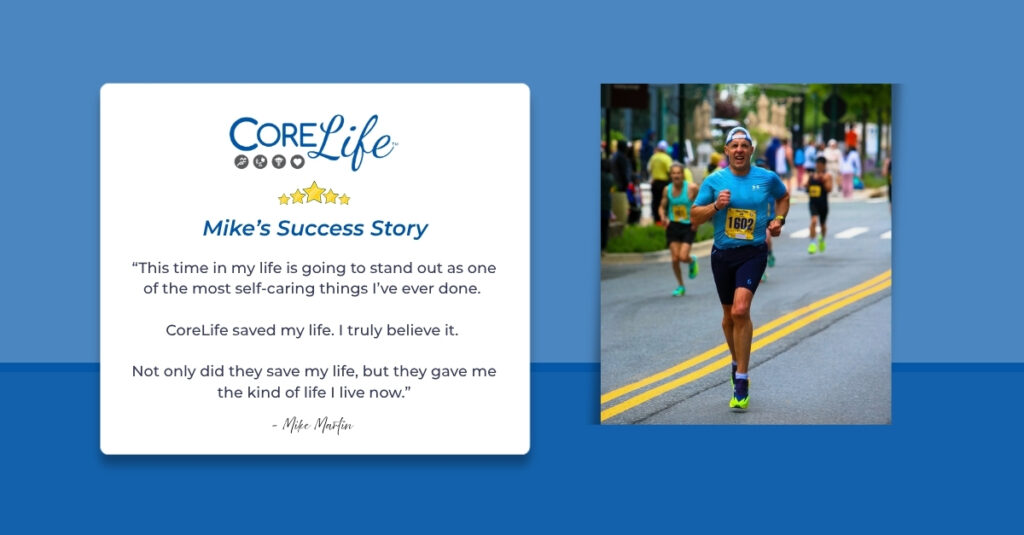
Turning 50 was looming on the horizon. Inspired by watching his fiancé, Megan, complete the brutal JFK 50-Mile Ultramarathon in late 2023, Mike turned to her with a visionary goal: “I’d really like to try to run a 50-mile race when I turn 50.”
For the next year, the couple trained aggressively, building up to staggering volumes of 40 to 50 miles of running a week, a distance the Mike of 2022 would have deemed an absolute impossibility. Garrett kept him strong in the gym, protecting his knees as the mileage climbed.
In November 2024, Mike crossed the ultimate finish line. He and Megan ran all 50 miles together, step for agonizing step. As they approached the finish line, their entire blended family was waiting.
Mike had carried a ring with him for fifty miles. At the finish line, he dropped down onto one knee and asked Megan to marry him.
She said yes! In a beautifully human moment, Mike realized his frustrated, proud legs were completely locked up. He laughed as his family literally had to haul him back to his feet. He wore the heavy finisher’s medal, but he knows he did not carry it alone. “I say to this day, Garrett and James basically earned that medal with me as I ran.”
Today, Mike Martin is an inspiration within his community. Patients routinely walk into CoreLife, pointing to Mike’s referral.
Mike knows the battle is not over; he still navigates his relationship with food and the instinct to stress-eat every day. But he possesses a lifelong education that can never be taken away from him.
“It’s not to sound cliché, but it’s like, feed a man a fish, you feed him for a day; teach a man to fish, you feed him for a lifetime,” Mike says, summarizing his transformation. “I knew Garrett wasn’t going to do it for me, I knew James wasn’t going to do it for me. But tapping into their brains at CoreLife taught me how to help myself.”
“We live in a society that wants immediate gratification, if it doesn’t happen, people just quit,” he notes. “But I was so ready to buy into this. No matter what it takes, I am going to stay the course.”
Mike did not just lose 100 pounds. He broke a twenty-year prison of pain, won back his identity, and secured a future where he can hike, camp, and live vibrantly with the people he loves.
“The day that I breathe my last breath and I look back, this time in my life is going to stand out as one of the most self-care things I’ve ever done,” Mike says. “CoreLife saved my life. I truly believe it. Not only did they save my life, but they gave me life, the kind of life I live now.”
Help Mike continue his journey and reach the starting line at the New York City Marathon by supporting his fundraiser here
Mike Martin Patient Interview