
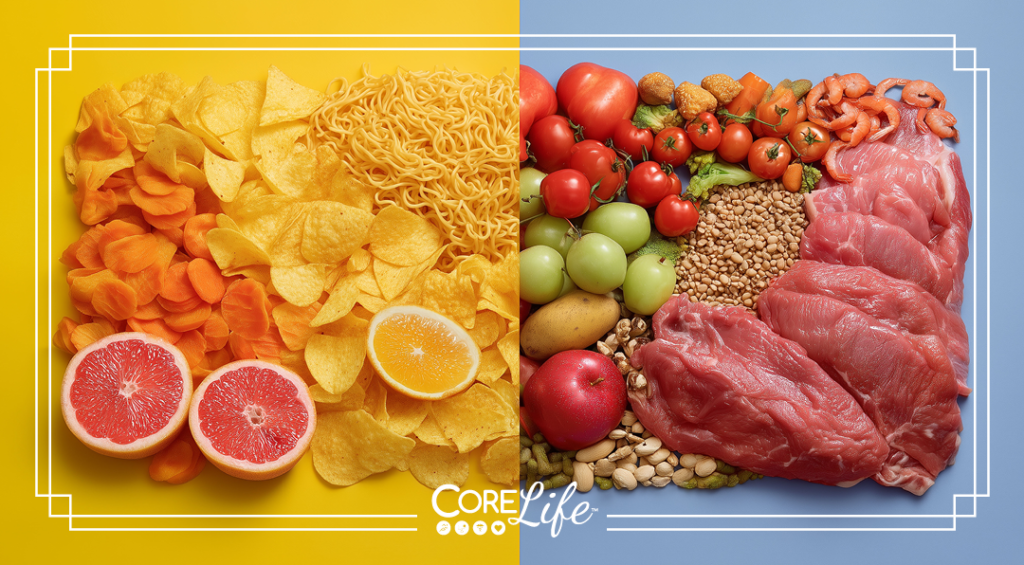
Nutrition advice can feel overwhelming. You often hear terms like whole, processed, and ultra-processed everywhere, but it is not always clear what they mean or how they affect your health. This article is meant to help you understand these categories in a practical and realistic way.
The goal is not to tell you to eliminate entire groups of foods or to eat only one type. Instead, it is about building awareness and giving you the tools to make informed choices. Knowing where foods fall on this spectrum can help you plan meals that support your energy, keep your blood sugar steady, and align with your long-term health goals.
Whole Foods
Whole foods are foods that are minimally altered from their natural state. Examples include fresh vegetables, fruits, whole grains, nuts, seeds, eggs, fish, and unprocessed meats. These foods are nutrient-dense, filling, and provide energy that lasts.
Meals built around whole foods often help you feel satisfied for longer, reduce cravings, and stabilize blood sugar. For example, oatmeal with fruit and nuts for breakfast or a salad with grilled chicken and quinoa for lunch delivers fiber, protein, and healthy fats. Whole-food-based meals form the foundation of a healthy diet because they provide nutrients your body recognizes and digests effectively.
Processed Foods
Processed foods fall in the middle of the spectrum. These foods have been altered from their natural state for convenience, preservation, or taste, but they remain mostly recognizable as food. Examples include plain yogurt, cheese, canned beans, and whole-grain bread.
The term “processed” does not automatically mean a food is bad. Many processed foods remain highly nutritious and can be included regularly. The key is to pay attention to what has been added. Plain 0% fat Greek yogurt is processed but still an excellent source of protein and calcium. On the other hand, a flavored yogurt or a bottle of wine is also processed, but these may not support health goals if consumed daily or in large amounts.
Being aware of added sugar, salt, and fat can help you decide if a processed food fits as a daily choice or an occasional indulgence. Processed foods can enhance meals and provide convenience without undermining your health goals. Cheese on a salad, canned beans in a soup, or whole-grain bread with lean protein are examples of thoughtful uses of processed foods.
Ultra-Processed Foods
Ultra-Processed Foods (UPFs) are created through extensive industrial processing. They often include ingredients you could not use at home, such as emulsifiers, preservatives, artificial colors, flavor enhancers, modified starches, and protein isolates.
These foods usually have their original structure broken down through processes like extrusion, refining, hydrolysis, or high-heat treatment. The natural food matrix, which includes fibers and plant or animal tissues, is disrupted and then reassembled. As a result of this, many experts describe these products as “food-like substances” rather than real food.
Why This Matters
- Rapid digestion and low satiety: The breakdown of natural structures means UPFs often require little chewing and are digested quickly. Calories enter the bloodstream faster, and fullness signals may be delayed.
- Engineered for overconsumption: UPFs are designed for taste, texture, and convenience. The combination of sugar, fat, salt, and flavor enhancers encourages repeated consumption and can make it easy to eat beyond hunger.
- Altered nutritional profile: UPFs tend to be energy-dense but lower in fiber, vitamins, and minerals compared with whole or minimally processed foods.
- Impact on digestion and metabolism: The additives and degraded food matrix may affect gut microbiota, nutrient absorption, and metabolic responses, potentially contributing to long-term health concerns.
Frequent consumption of UPFs is associated with weight gain, blood sugar instability, and other health risks. Recognizing UPFs as industrially engineered “food-like substances” helps explain why they may feel satisfying in the moment but do not provide lasting nutrition or fullness. Understanding this can guide intentional choices without judgment.
Putting It All Together
Whole foods provide the foundation of a healthy diet. Processed foods can be included thoughtfully, paying attention to added ingredients and frequency. Ultra-processed foods are best treated as occasional choices and eaten intentionally.
Awareness of these categories helps you understand your habits and how different foods affect hunger, energy, and overall health. Simple, consistent adjustments, such as choosing plain Greek yogurt instead of flavored yogurt, swapping white bread for whole-grain bread, or limiting packaged snacks, can improve nutrient quality and support long-term goals.
The aim is not perfection. It is about understanding your options and making informed choices that fit your life, preferences, and health needs. Over time, this knowledge allows you to enjoy a variety of foods while supporting your wellbeing.
Scientific References
Godsey, T. J., Eden, T., & Emerson, S. R. (2025). Ultra-Processed Foods and Metabolic Dysfunction: A Narrative Review of Dietary Processing, Behavioral Drivers and Chronic Disease Risk. Metabolites, 15(12), 784. https://doi.org/10.3390/metabo15120784
Hall, K. D., Ayuketah, A., Brychta, R., Calland, S. G., Chen, K. Y., Courville, A. B., … & Zhou, M. (2019). Ultra-processed diets cause excess calorie intake and weight gain: An inpatient randomized controlled trial of ad libitum food intake. Cell Metabolism, 30(1), https://pmc.ncbi.nlm.nih.gov/articles/PMC7946062/
Monteiro, C. A., Cannon, G., Levy, R. B., Moubarac, J. C., Louzada, M. L., Rauber, F., … & Jaime, P. C. (2019). Ultra-processed foods: What they are and how to identify them. Public Health Nutrition, 22(5), https://pmc.ncbi.nlm.nih.gov/articles/PMC10260459/
Teo, P. S., Lim, A. J., Goh, A. T., Janani, R., Choy, J. Y. M., McCrickerd, K., & Forde, C. G. (2022). Texture-based differences in eating rate influence energy intake for minimally processed and ultra-processed meals. The American Journal of Clinical Nutrition, 115(5), https://pubmed.ncbi.nlm.nih.gov/35285882/